
关于PHP中self关键字的用法详解
发布:smiling 来源: PHP粉丝网 添加日期:2022-05-22 09:33:06 浏览: 评论:0
与 parent 、 static 以及 this 的区别
要想将彻底搞懂 self ,要与 parent 、 static 以及 this 区分开。以下分别做对比。
parent
self 与 parent 的区分比较容易: parent 引用父类/基类被隐盖的方法(或变量), self则引用自身方法(或变量)。例如构造函数中调用父类构造函数:
- class Base {
- public function __construct() {
- echo "Base contructor!", PHP_EOL;
- }
- }
- class Child {
- public function __construct() {
- parent::__construct();
- echo "Child contructor!", PHP_EOL;
- }
- }
- new Child;
- // 输出:
- // Base contructor!
- // Child contructor!
static
static 常规用途是修饰函数或变量使其成为类函数和类变量,也可以修饰函数内变量延长其生命周期至整个应用程序的生命周期,但是其与 self 关联上是PHP 5.3以来引入的新用途:静态延迟绑定。
有了 static 的静态延迟绑定功能,可以在运行时动态确定归属的类,例如:
- class Base {
- public function __construct() {
- echo "Base constructor!", PHP_EOL;
- }
- public static function getSelf() {
- return new self();
- }
- public static function getInstance() {
- return new static();
- }
- public function selfFoo() {
- return self::foo();
- }
- public function staticFoo() {
- return static::foo();
- }
- public function thisFoo() {
- return $this->foo();
- }
- public function foo() {
- echo "Base Foo!", PHP_EOL;
- }
- }
- class Child extends Base {
- public function __construct() {
- echo "Child constructor!", PHP_EOL;
- }
- public function foo() {
- echo "Child Foo!", PHP_EOL;
- }
- }
- $base = Child::getSelf();
- $child = Child::getInstance();
- $child->selfFoo();
- $child->staticFoo();
- $child->thisFoo();
输出结果如下:
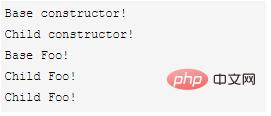
在函数引用上, self 与 static 的区别是:
对于静态成员函数, self 指向代码当前类, static 指向调用类;对于非静态成员函数, self 抑制多态,指向当前类的函数, static 等同于 this ,动态指向调用类的函数。
parent 、 self 、 static 三个关键字联合在一起看挺有意思,分别指向父类、当前类、子类,有点“过去、现在、未来”的味道。
this
self 与 this 是被讨论最多,也是最容易引起误用的组合。
两者的主要区别如下:
1、this 不能用在静态成员函数中, self 可以;
2、对静态成员函数/变量的访问, 建议 用 self ,不要用 $this:: 或 $this-> 的形式;
3、对非静态成员变量的访问,不能用 self ,只能用 this ;
4、this 要在对象已经实例化的情况下使用, self 没有此限制;
5、在非静态成员函数内使用, self 抑制多态行为,引用当前类的函数;而 this 引用调用类的重写(override)函数(如果有的话)。
self 的用途
看完与上述三个关键字的区别, self 的用途是不是呼之即出?一句话总结,那就是: self总是指向“当前类(及类实例)”。详细说则是:
1、替代类名,引用当前类的静态成员变量和静态函数;
2、抑制多态行为,引用当前类的函数而非子类中覆盖的实现;
Tags: self关键字
分享到:



推荐文章
热门文章
最新评论文章
- 写给考虑创业的年轻程序员(10)
- PHP新手上路(一)(7)
- 惹恼程序员的十件事(5)
- PHP邮件发送例子,已测试成功(5)
- 致初学者:PHP比ASP优秀的七个理由(4)
- PHP会被淘汰吗?(4)
- PHP新手上路(四)(4)
- 如何去学习PHP?(2)
- 简单入门级php分页代码(2)
- php中邮箱email 电话等格式的验证(2)